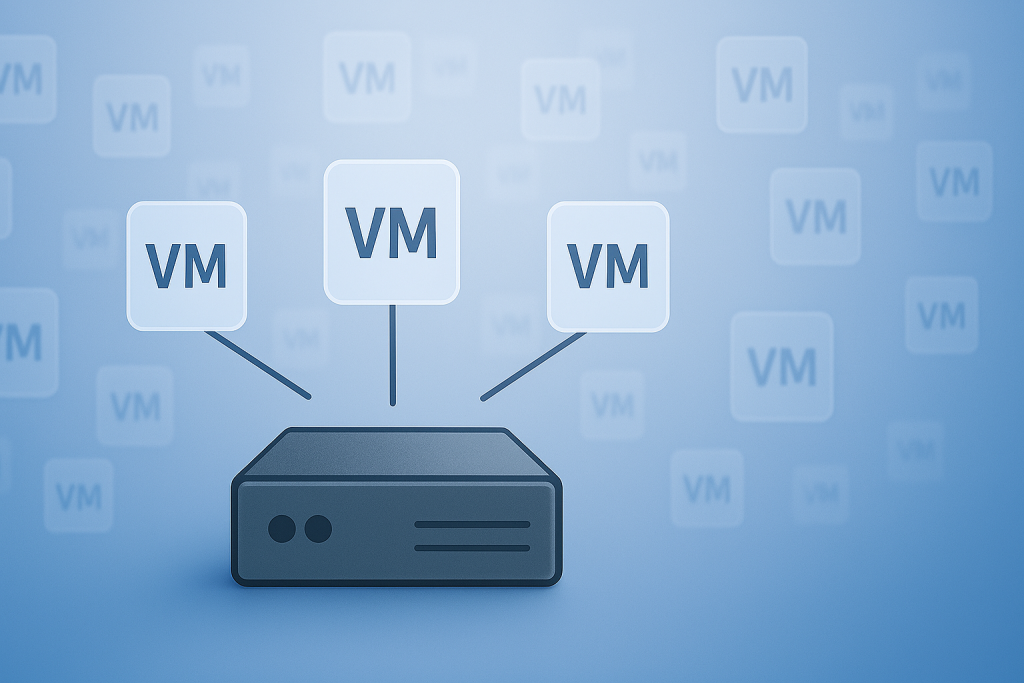

Virtualization has become a cornerstone of modern IT infrastructure. It allows you to run multiple virtual machines (VMs) on a single physical server, reducing hardware costs, improving scalability, and simplifying disaster recovery.
But as licensing costs rise — especially with VMware — many businesses are asking:
Is there a better way to virtualize without breaking the budget?
The answer is yes. But first, let’s look at why virtualization matters.
Why Virtualization Is Worth It
Virtualization offers a range of benefits for both small businesses and enterprise environments:
- Resource efficiency: Run multiple workloads on one physical machine.
- Scalability: Add or remove virtual machines as needed.
- Disaster recovery: Snapshot and replicate VMs for fast recovery.
- Security: Isolate workloads to reduce risk.
- Flexibility: Test new software or configurations without affecting production systems.
- Cost savings: Reduce hardware spend and energy usage.
It’s especially useful for businesses managing multiple servers, legacy applications, or hybrid cloud setups.
Why VMware Is Being Reconsidered
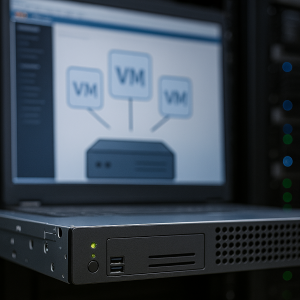
VMware has long been the dominant player in virtualization, but recent changes have prompted many to rethink their reliance:
- Licensing costs have increased significantly
- Broadcom’s acquisition has introduced uncertainty
- Core-based licensing can inflate costs for high-performance hosts
- Vendor lock-in limits flexibility
- vSAN and other add-ons drive up total cost of ownership
For many businesses, the question isn’t whether to virtualize — it’s how to do it affordably.
Strong Alternatives to VMware
Here are some cost-effective, capable alternatives worth considering:
XCP-ng is a powerful open-source virtualization platform based on Citrix XenServer. It offers strong performance, a clean web interface, and active community support. It’s ideal for small to mid-sized businesses, labs, and IT teams that want flexibility without licensing constraints. XCP-ng supports live migration, snapshots, and backup integration — all without the overhead of proprietary licensing.
Proxmox VE combines KVM virtualization with LXC containers, giving you a flexible and efficient platform for managing virtual environments. It includes built-in backup tools, clustering, and a web-based interface. Proxmox is especially popular with small to mid-sized businesses and IT professionals who want full control without vendor lock-in.
Microsoft Hyper-V is a type 1 hypervisor built into Windows Server. It integrates well with Active Directory and other Microsoft services, making it a natural fit for Windows-centric environments. While not open-source, it’s included with Windows Server licensing, which makes it cost-effective for businesses already in the Microsoft ecosystem.
Nutanix AHV is a hyperconverged platform that combines compute, storage, and networking into a single solution. It’s designed for scalability and simplicity, with strong performance and built-in disaster recovery features. Nutanix is ideal for enterprises looking to streamline infrastructure while reducing complexity.
Each of these platforms offers solid virtualization capabilities without the licensing overhead of VMware. Some are free, others offer paid support tiers — but all give you more control over your infrastructure spend.
What to Consider Before Switching
- Workload compatibility: Will your existing VMs and apps run smoothly?
- Management tools: Do you need a GUI, CLI, or API access?
- Support and documentation: Is there a strong community or vendor support?
- Migration effort: Can you export/import VMs easily?
- Security and patching: Are updates frequent and reliable?
The goal isn’t just to replace VMware — it’s to modernize your virtualization strategy in a way that’s sustainable, scalable, and cost-effective.
Conclusion: Virtualization Without the Price Shock
Virtualization is too valuable to abandon — but it doesn’t need to come with premium licensing fees. Whether you’re running a small business server or managing enterprise workloads, there are reliable alternatives that offer the same core benefits without the cost creep.
By exploring platforms like Hyper-V, Proxmox or Nutanix AHV, you can build a virtualization strategy that’s lean, flexible, and future-proof.